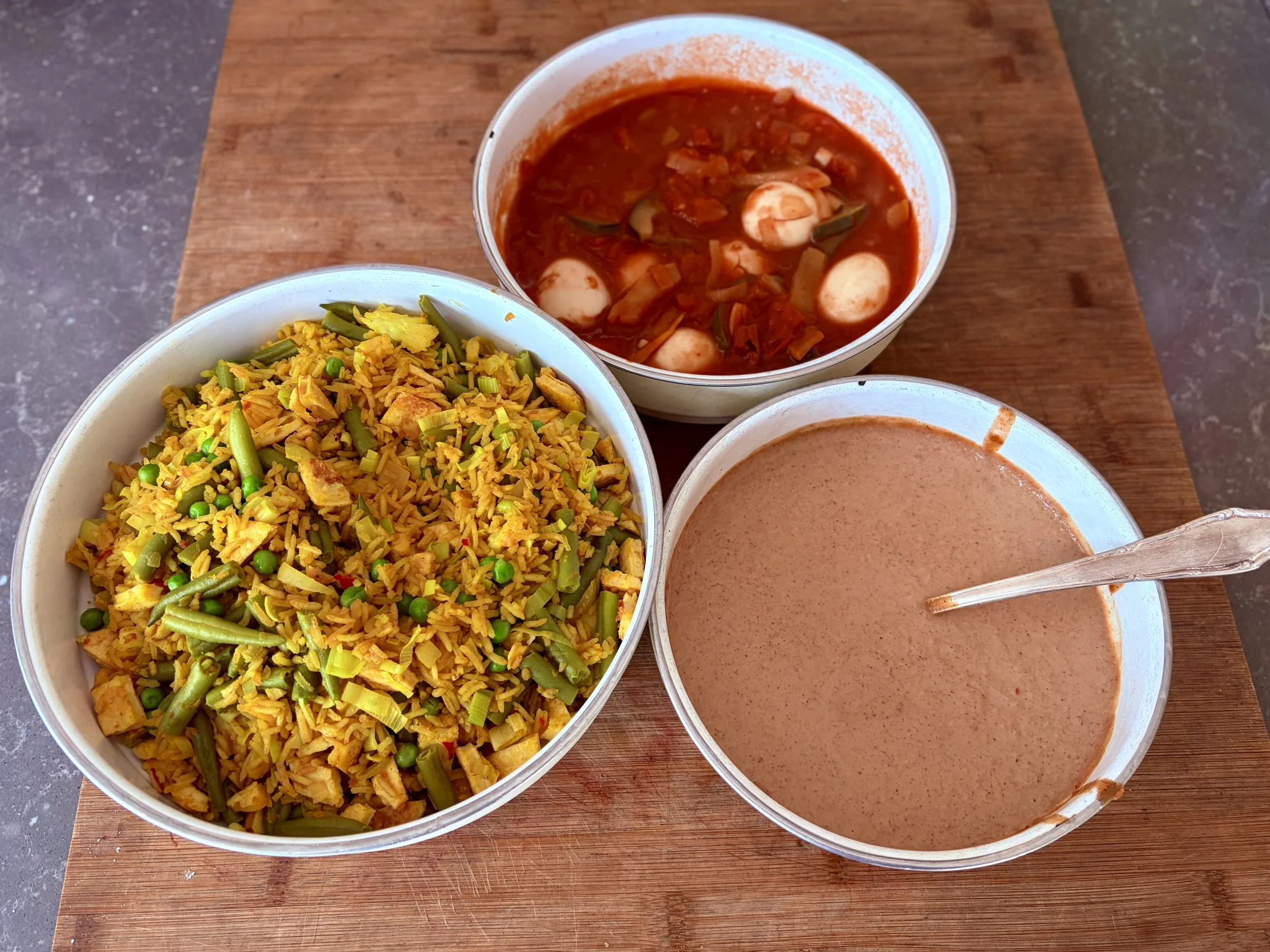
A Farm-Grown Nasi Goreng: Turning the Harvest into an Indonesian Feast
We’re still right in the middle of high harvest season, and this week our community farm share reflected it: a lovely variety of beans — green beans, butter beans, and snijbonen (Dutch-style flat beans) — along with the first leeks of the season, a few of the last early potatoes, onions, garlic, zucchini, and tomatoes. From our own greenhouse came red peppers and even more tomatoes.
With a harvest that varied, there was really only one thing to make: nasi goreng. It’s endlessly forgiving, easy to adjust to whatever’s in the crate, and a perfect way to let a whole week’s worth of vegetables shine in one pan.
The Main Dish: Nasi Goreng
Prep first
Start by getting everything ready before the wok goes on, since nasi goreng comes together quickly once it starts:
Chop the onion
Cut the green beans in half and cook them, then set aside
Chop a few cloves of garlic
Chop a 2–3 cm piece of ginger
Cut two leeks into half-rings and set aside
Either chop a red pepper, or stir through a spoonful of homemade sambal instead
The rice
Two cups of rice cooked in vegetable stock forms the base — and the goal is a nice, dry rice rather than anything sticky. The Indian method works well here: stir the rice briefly in a little coconut oil, add one and a half times as much water as rice, and bring it to a simmer for about 8 minutes. Then turn the heat right down to zero and let the pan stand, lid on, for 20 minutes. After that, lift the lid and the rice should be perfectly done. Let it cool a little before using, so it stays loose rather than clumping together.
The omelet
Whisk 4–5 eggs and cook into a simple omelet. Once it’s set, chop it into small pieces and set aside.
Bringing it together
Heat some oil in a wok and stir-fry the onion and leek for a few minutes until softened. Add the garlic, ginger, and sambal (or chopped pepper) and stir for another minute or two. Then stir in the spices — a teaspoon each of laos (galangal), sereh (lemongrass), and kurkuma (turmeric) — and let them cook through for a minute before adding the rice, beans, and peas (corn works nicely here too, if you have some). Finally, fold in the chopped omelet.
Keep everything moving in the wok, adding soy sauce to taste, until the rice is evenly coated and every grain has picked up some color and flavor.
Two Side Dishes to Complete the Feast
Homemade satay sauce
In a pan with a little coconut oil, sauté a chopped onion, a few garlic cloves, a teaspoon of homemade sambal, and some ginger. Add 250ml of coconut milk, a small stock cube, a splash of water, and a few generous spoonfuls of peanut butter. Let it all warm through gently — without boiling — until the peanut butter has fully melted in. Blend until smooth, tasting as you go and adjusting the spice as needed.
Sweet-sour zucchini with boiled eggs and tomato
Take a bowl of previously made sweet-sour zucchini and warm it in a pan. Add a can of chopped tomatoes along with some fresh tomato, a splash of soy sauce, and 6–7 boiled eggs. Let everything simmer gently for 10–15 minutes, tasting and adjusting the seasoning before serving.
A Feast Worth the Effort
What ends up on the table is a rich spread built almost entirely from vegetables grown on our own farm, a homemade sambal, and home-preserved zucchini — with just a handful of pantry staples from the grocery store filling the gaps. It’s the kind of meal that makes the height of harvest season feel like exactly what it is: abundant, and worth celebrating one dish at a time.