A Garden That Carries Itself
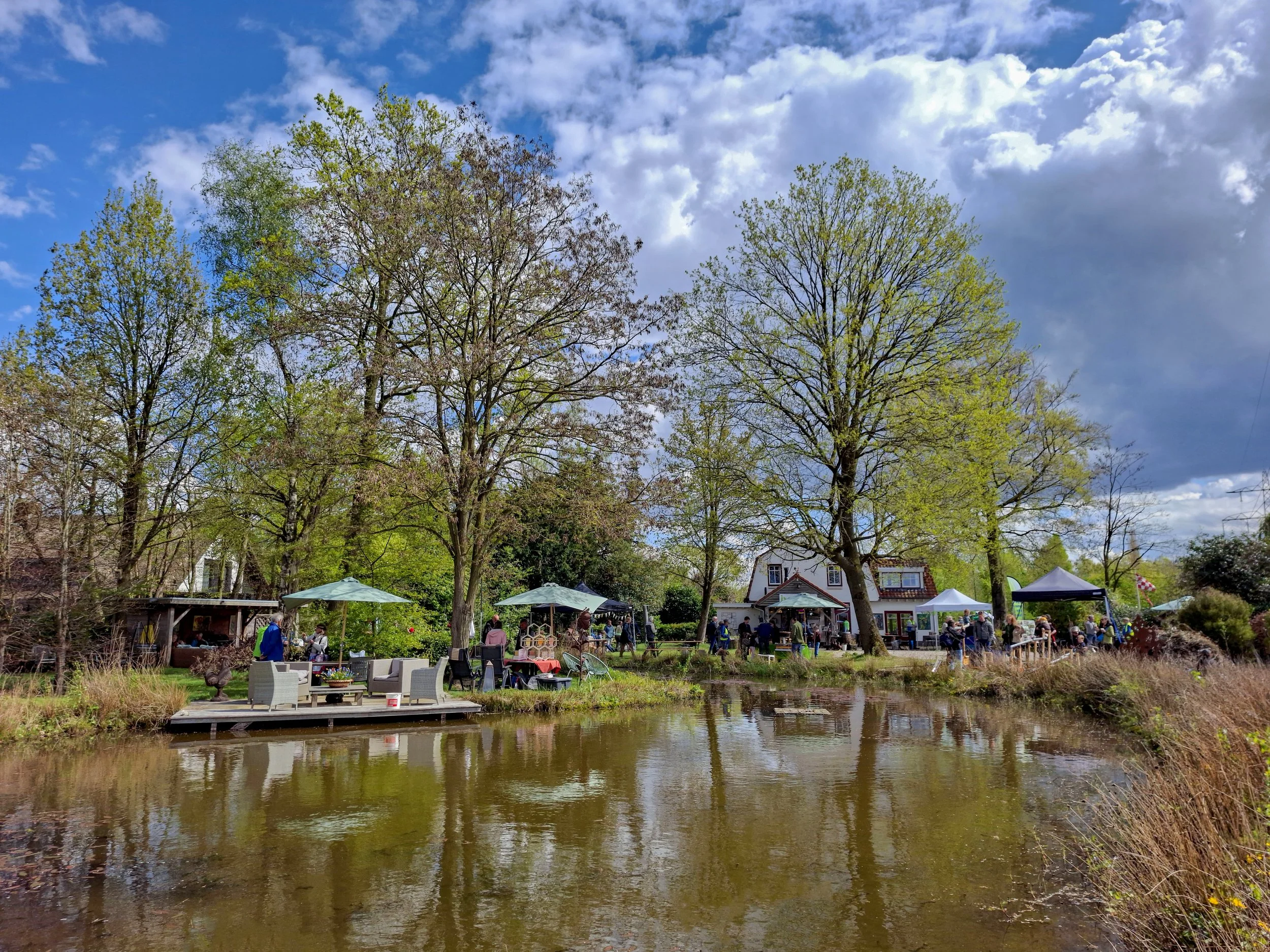
Anyone looking over our fence won’t find neat borders or tidy raked paths. What you will find: a pond full of frogs, grass paths winding through the tall greenery, and little piles of branches where hedgehogs come to hide. More than nine thousand square metres in which we mostly let nature take her course — and it works.
Together with the municipality of Heeze-Leende and IVN, we opened our garden during the Water Festival. Visitors came to see how you can hold water in your garden, how to invite biodiversity in, and above all: how to do less rather than more. Because that’s really the heart of our oasis. We don’t water. We don’t visit the garden centre. Our green bin almost never goes out to the kerb.
A few things that work for us
No drinking water for the plants. It’s been treated, and it actually does plants more harm than good. Rainwater from the barrel is better, and the cooking water from potatoes — with its bit of starch — is better still. Too much watering only grows weak plants.
A pond that looks after itself. Fish and frogs arrive on their own; a heron sometimes drops in with a little fish hanging from its feet. No fountain, no pump. Still water that is alive, with kingfishers diving in now and then.
Piles of branches instead of garden waste hauled away. Our bramble heap is the finest hotel a hedgehog could ask for. And the mice that find shelter here become food for the owl currently brooding on eight eggs.
Native plants, no bamboo. We’re working on a food forest with berries, apples, and pears. And if the grass turns brown in summer — leave it. Plants release their seeds precisely in dry spells, and at the first shower everything recovers on its own.
What if your garden is small?
People often tell us they’d love to do the same, but their garden is only a few square metres, or just a balcony. The good news: scale doesn’t really matter. Nature moves into every crack you leave for her.
A zinc bath or a large bowl sunk into the ground becomes a tiny pond. Within a season, you’ll hear water beetles, maybe a frog. A single native shrub — hawthorn, elder, dog rose — feeds more insects and birds than an entire lawn ever could. In a quiet corner, let a little heap of leaves and twigs stay through winter; it’s a hibernation spot for lacewings, ladybirds, and sometimes a hedgehog if the garden is reachable from next door. Climbing plants like honeysuckle or ivy turn a bare fence into a vertical forest for sparrows and wrens.
And if you can, lift a tile or two. Every square metre of soil that breathes again makes a difference — for insects, for birds, and for the groundwater underneath.
Holding water where it falls
The real trick, especially in a warming climate, is to keep rainwater where it lands instead of sending it down the drain. A rain barrel is the obvious start, but there’s more.
Mulch your beds with leaves, straw, or wood chips. It keeps the soil cool, holds moisture, and feeds the worms. A mulched bed needs a fraction of the water that bare soil does.
Dig a shallow hollow — a little rain basin — in the lowest corner of the garden, and fill it with moisture-loving plants. When a downpour arrives, it collects there and slowly seeps down instead of running off into the street.
Build up the life in your soil. Compost, leaf mould, the contents of a worm bin — the more organic matter, the more your soil behaves like a sponge. Healthy soil can hold tens of litres of water per square metre.
And plant for drought. Lavender, sedum, yarrow, thyme — they barely ask for anything, and the bees adore them.
Watching along
The loveliest thing about gardening this way is that it isn’t really work. It’s a form of watching along. The chickens eating the weeds, the young green pushing up again after every rainfall, the heron resting a moment by the water. You don’t just get a garden in return, but a small piece of wilderness.
And anyone can have that — on nine thousand square metres, or on a balcony three floors up.