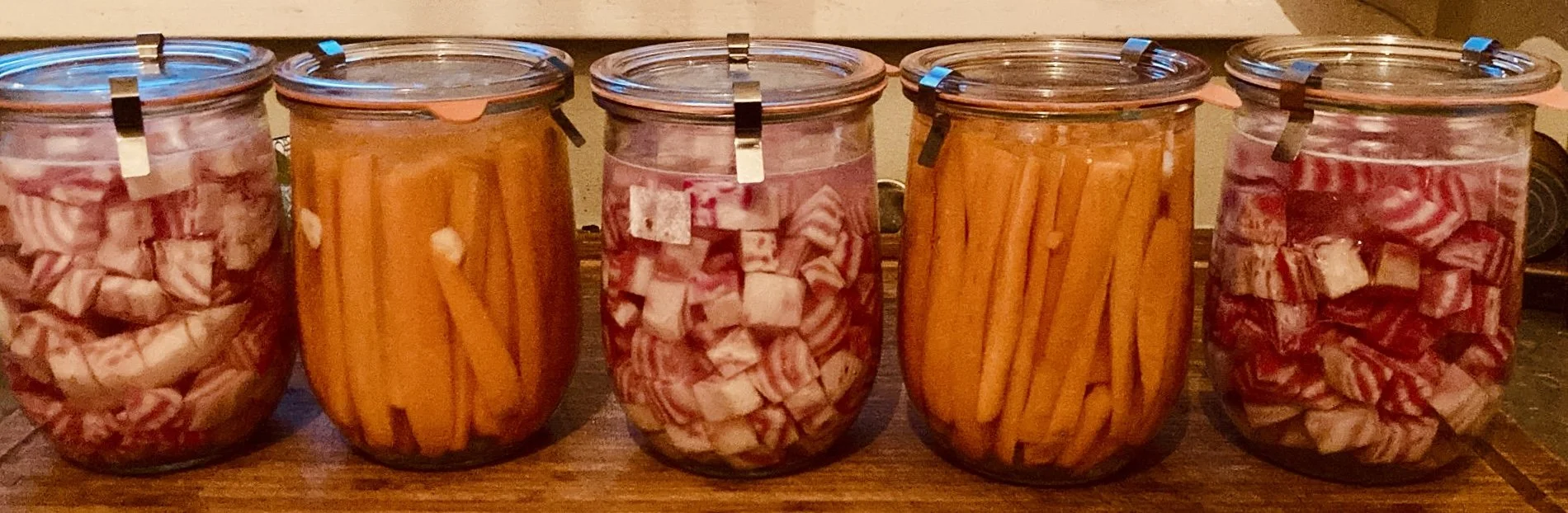
Fermenting Our Way Through Winter: Beets & Carrots for Year-Round Flavor
This week I’ve already shared several blog posts about the seasonal vegetables we’re getting in huge volumes from our community farm. I’ve posted some delicious vegan recipes using carrots, pumpkin, potatoes, red cabbage, and more. But even after all that cooking, we still have a lot left in our cellar!
As I’ve written about in the past, fermentation is not only incredibly healthy but also wonderfully flavorful in so many ways – especially when you experiment with it. So that’s exactly what I did this week: I fermented beets and carrots.
Why Fermentation Makes Sense
There’s something magical about fermentation. Yes, it requires some work upfront – cutting, preparing, and then the patience to wait at least 2-3 weeks before that first tasting. But here’s the best part: you can store fermented vegetables for up to a year.
This means that in the height of summer, when we’re harvesting completely different vegetables, we can still enjoy the taste of fermented autumn beets and carrots. Fermentation gives you year-round opportunities to experiment with different flavor combinations and dishes. It’s like preserving a little bit of each season to enjoy whenever you want.
My Two Fermentation Experiments
1. Vanilla Fermented Beets
Ingredients:
Beets
Fresh vanilla pod
Salt
Water
Method:
Cut the beets into small cubes of about 1cm. Place them in a clean glass jar. Scrape the seeds from a fresh vanilla pod and add them to the jar. Now fill the jar with salted water – use about 2-2.2% salt based on the combined weight of the beets and water.
Close the jar and keep it at room temperature for 2-3 weeks. Taste it after this period. If it’s to your liking, move the jar to your cellar or another dark, cool place to slow down the fermentation process.
The vanilla adds an unexpected sweetness and depth to the earthy beets – it’s a combination I never would have thought of before experimenting!
2. Garlic Fermented Carrots
Ingredients:
Carrots
2 cloves of garlic
Salt
Water
Method:
Cut the carrots into thin strips, about 80% of the height of your jar (though smaller pieces work fine too). Slice 2 cloves of garlic thinly. Fill the jar with carrot strips until it’s full and slightly pressed down – you want them packed but not crushed.
Make the same salted water solution as with the beets (2-2.2% salt). Tuck the garlic slices between the carrot strips as you fill the jar. Pour the salted water over everything until the carrots are fully submerged.
Store the same way as the beets: 2-3 weeks at room temperature, then move to cool storage once it tastes good to you.
Storage & Enjoying Your Ferments
Both of these fermented vegetables can be kept for up to a year when stored properly in a cool, dark place. This is how our grandparents preserved their harvests before refrigeration became common – and the methods work just as well today.
Endless Possibilities
The beauty of having these fermented vegetables on hand is the versatility. Use them:
As a tangy side dish
Chopped into salads for a probiotic boost
As a colorful topping for grain bowls
Alongside sandwiches
Mixed into wrapsAs a flavorful addition to winter stews
Fermentation transforms simple autumn vegetables into complex, tangy, probiotic-rich foods that enliven any meal. And knowing that I’m preserving this harvest to enjoy months from now – maybe on a hot July day when I’m craving something different – makes the effort feel even more worthwhile.
Have you tried fermenting vegetables? What’s your favorite combination? I’d love to hear about your fermentation experiments!